Auto-generated email has a reputation problem.
Some people hear it and picture spammy blasts, awkward personalization, and that weird “Hope this email finds you well” energy that makes you want to close the tab. Others swear by it because, well, it’s the only way to reach enough people to grow a B2B pipeline without hiring an army of SDRs.
Both sides are right. Kind of.
Auto-generated email can be incredibly effective. It can also quietly destroy your domain, tank deliverability, and teach prospects to ignore you forever. The difference is not “better copy” or “a different tool” (though those help). The difference is the system.
This guide is that system. Not theory. Not “best practices” pasted from 2017. The real mechanics of how auto-generated email works in 2026, what breaks it, and how to do it without becoming the person everyone blocks.
We’ll cover strategy, deliverability, list quality, personalization, sequencing, AI, measurement, and the operational stuff nobody wants to talk about. And yes, I’ll reference PlusVibe where it naturally fits, because it’s built for exactly this: cold email automation plus deliverability, enrichment, validation, and AI personalization in one place.
What “Auto-Generated Email” actually means (because everyone uses the term differently)
When people say “auto-generated email”, they might mean:
- Triggered transactional emails
Password resets, receipts, account alerts. These are system-generated and usually expected. Not what we’re focusing on here. - Marketing automation emails
Newsletters, drip campaigns, nurture sequences. Typically opt-in. - Sales outreach automation (cold email)
The spicy one. Sending outbound email to prospects who did not opt in with the goal of starting a conversation.
This guide is mostly about #3 with overlap into #2 specifically: B2B cold outreach that uses automation and AI to generate and personalize emails at scale while protecting deliverability.
If you’re doing outbound, you’re basically balancing three forces:
- Scale (send enough to matter)
- Relevance (make it feel like it was meant for them)
- Deliverability (actually reach the inbox not spam or nowhere)
Most teams optimize one sometimes two. The winners get all three working together.
To achieve this balance effectively requires a strategic approach towards creating sales email templates that bring positive responses and understanding the nuances of business communication, including proper email formatting.
Additionally, improving cold email open rates is crucial for success in this realm. It's also important to be aware of potential pitfalls such as falling into domain blacklists which can severely impact your deliverability rates.
Finally, don't underestimate the power of follow-ups in your cold email strategy - they can significantly increase your chances of getting a response as discussed in our guide on follow-up emails for cold outreach.
Why auto-generated cold email fails (the boring reasons that are actually the real reasons)
People blame copy. They blame AI. They blame “email doesn’t work anymore”.
Usually it’s one of these:
- Your list is messy (bad targeting, outdated contacts, role mismatch)
- You’re sending to invalid emails (bounces hurt you fast)
- You’re not warmed up (new domain, new inbox, sudden volume spike)
- Your domain reputation is weak (or already damaged)
- You’re over-sending (too many emails per inbox, too fast)
- Your personalization is fake (token swaps that look like token swaps)
- Your offer is vague (no reason to reply)
- Your tracking is skewed (open rates are unreliable, you optimize the wrong things)
- You ignore spam complaints (and they add up)
Deliverability is not a one-time checkbox. It’s an operating system. The moment you treat it like a setup step, things start decaying.
The modern outbound stack (and where auto-generation fits)
A typical outbound system has these layers:
- ICP definition
Who you want. Who you don’t want. This is the start of everything. - Data sourcing + enrichment
Firmographics, technographics, intent, recent posts, hiring signals, funding, whatever you use. - Email discovery + validation
Find email, verify it before sending. Always. - Deliverability infrastructure
Domains, inboxes, DNS records, warm-up, sending limits, monitoring. - Personalization + copy generation
AI can help here. But only if you feed it real signals and constraints. - Sequencing + automation
Multi-step sequences, conditional logic, timing windows. - Measurement + iteration
Reply quality, positive reply rate, meetings booked, spam complaints, bounce rates, inbox placement.
PlusVibe is basically designed to cover a lot of that in one place: inbox warm-up, deliverability controls, unlimited inbox connections, AI-powered hyper-personalization (including images/GIFs/video), enrichment, validation, sequencing, and a dashboard to track performance.
But even if you use something else, the principles are the same.
The first rule: deliverability is your real product
If your emails don’t land in the inbox, your copy doesn’t matter. Your personalization doesn’t matter. Your offer doesn’t matter.
So let’s get practical.
Deliverability basics you actually need to respect
- SPF, DKIM, DMARC must be configured correctly.
- Domain reputation is earned, not bought.
- Inbox reputation matters too, not just the domain.
- Volume ramp-up is real. Sudden spikes look suspicious.
- Engagement signals matter. Replies help. Spam complaints hurt more than you think.
The key metrics that tell you you’re in trouble
- Bounce rate: keep it low. If you’re above 2 percent, something is wrong. If you’re above 5 percent, stop sending.
- Spam complaints: keep it extremely low. Even 0.1 percent matters at scale. (PlusVibe claims <0.3 percent spam complaints, which is a healthy benchmark in outbound reality.)
- Inbox placement: not just “delivered”. You want inbox, not spam, not promotions (Gmail tabs can be fine, but spam is death).
- Reply rate and positive reply rate: replies are a deliverability signal and a business metric.
A simple mental model
Deliverability is basically:
Identity (DNS + domain history) + Behavior (sending patterns) + Feedback (engagement and complaints) + List quality (bounces) + Content risk (spammy patterns).
If one of those is off, your system starts leaking.
Domains and inboxes: how to set up for scale without burning your main domain
If you’re doing cold outreach, don’t use your primary domain for high-volume outbound. It’s not worth it.
Common setups look like:
- Primary:
company.com - Outreach:
trycompany.comorcompanyhq.comorgetcompany.com
Not perfect, but safer. You also want consistency and legitimacy, not “company-mail-now.biz”.
How many inboxes do you need?
Depends on volume and your per-inbox daily cap.
A safe-ish range many teams use:
- 20 to 40 emails per inbox per day early on
- maybe 50 to 80 if the inbox is aged, warmed, and your targeting is clean
If you push 200 a day from one inbox, you’re basically daring the mailbox providers to punish you.
PlusVibe leans into scaling by letting you connect unlimited inboxes and run unlimited campaigns, which matters because the easiest way to scale is horizontal. More inboxes, lower per-inbox volume.
Warm-up: what it is, what it isn’t, and why people do it wrong
Warm-up is sending natural-looking email traffic (and getting replies) to establish positive engagement patterns before you start cold outreach volume.
But. Warm-up is not magic. It won’t save a terrible list or spammy copy. And if you warm up then immediately blast 5,000 cold emails, you’ll still get hit.
Warm-up best practices (not too complicated)
- Start low volume.
- Increase gradually.
- Keep a stable schedule.
- Avoid weekends if your business normally doesn’t send on weekends.
- Maintain warm-up even while sending outbound, at least for the first few months.
PlusVibe includes customizable warm-up settings that can mirror typical business language and schedules. That last part matters more than people think. Warm-up that looks robotic can backfire.
List quality: the unsexy lever that changes everything
Auto-generated email fails most often because teams try to brute-force volume with a bad list.
A good list means:
- The person can actually buy (or strongly influence the purchase)
- They have the problem
- Your timing is not absurd
- The email address is real and deliverable
Build the list around a “why now”
This is where enrichment and triggers come in.
Examples:
- They posted about the problem on LinkedIn
- They just raised funding
- They’re hiring for roles that imply the initiative
- They launched a new product
- They added a tool to their stack that pairs with yours
- They’re expanding into a new region
PlusVibe talks about “40+ triggers in seconds” and personalization using recent posts and company news. That’s the direction you want. The point isn’t to collect trivia. The point is to give your email a reason to exist today.
Email validation is not optional
If you’re doing cold outreach and you’re not validating emails before sending, you’re basically paying to damage your sending reputation.
You need to:
- Find emails
- Validate them
- Clean the list using best email validation and list cleaning services
- Remove risky addresses (catch-alls, role accounts, etc depending on your risk tolerance)
PlusVibe includes built-in email validation and data enrichment and cleansing, which is exactly what you want in an outbound workflow. Especially if you’re importing large lists and running multiple campaigns.
Personalization: what works now (and what stopped working)
Old personalization was:
- First name
- Company name
- “Loved your website”
That’s not personalization. That’s a template.
Modern personalization is about:
- A relevant observation
- A reason you chose them
- A connection to a business outcome
- Something that can be verified quickly
And here’s the tricky part.
The personalization trap: being specific in a creepy way
If you quote a prospect’s tweet from 6 years ago, it can feel invasive. If you mention their kid’s soccer photo, you’re getting reported.
The best personalization sits in the professional zone:
- Recent post or comment
- Recent company announcement
- Hiring signal
- Product launch
- Case study that matches their industry
You can still be warm. Just don’t be weird.
AI personalization: the right way to use it
AI should not be used to invent facts. It should be used to summarize real signals you provide, write naturally from those signals, produce variants, angles, and brevity, and keep tone consistent. A great example of this is how PlusVibe positions “humanized AI models for industry-specific training” and hyper-personalization with text, images, GIFs, and video. That’s useful when the inputs are real and the output is constrained.
Images, GIFs, and video personalization: powerful, but not a toy
These can increase replies if done right, because they create a pattern break. But they also introduce risk:
- Large images can trip filters.
- Certain tracking methods can hurt deliverability.
- Overly salesy visuals feel like ads and get ignored.
The sweet spot:
- Keep visuals light.
- Make them genuinely tailored.
- Use them when they add clarity, not decoration.
Example use cases that work:
- A quick annotated screenshot of their site with one suggestion
- A 15 second video showing a relevant workflow
- A simple GIF that demonstrates the “before and after”
If you’re going to do this at scale, you need a platform that can generate these without turning your workflow into chaos. PlusVibe’s angle here is that it can generate highly engaging images, GIFs, videos tailored per prospect. If you test it, test deliverability and replies together. Do not just look at “wow cool”.
Writing auto-generated emails that still feel human
Let’s talk copy.
Auto-generated email copy should be:
- Short
- Clear
- Contextual
- Easy to respond to
- Low friction
And it should not sound like:
- A pitch deck
- A press release
- A chatbot trying too hard
A simple structure that keeps working
1) One line context
Why them. Why now.
2) One line problem or opportunity
Something they recognize.
3) One line proof
A relevant outcome, not generic credibility.
4) One question CTA
Make it easy to say yes, no, or later.
That’s it. Don’t overbuild it.
Example template (keep it plain)
Subject: quick question about {{initiative}}
Hi {{first_name}},
Saw {{trigger}} and it made me wonder if you’re also dealing with {{pain}} right now.
We’ve helped teams like {{peer_example}} reduce {{metric}} by {{result}} without {{common_tradeoff}}.
Worth a 10 min chat to see if it’s relevant for {{company}}?
Thanks,
{{sender}}
The template is not the magic. The inputs are.
Sequencing: the part that makes automation actually work
Most replies happen in follow-ups, not in the first email.
But most follow-ups are terrible. They’re either:
- “Just bumping this”
- A copy paste of the first email
- A guilt trip
- A novel
A good sequence does two things:
- It increases the chance they see you.
- It introduces new value each step.
A practical 5-step outbound sequence (that doesn’t feel insane)
- Email 1 (Day 1): context + question
- Email 2 (Day 3): add proof or insight
- Email 3 (Day 6): different angle, maybe a quick suggestion
- Email 4 (Day 10): “if not you, who owns this?” (role redirect)
- Email 5 (Day 14): breakup, polite, close the loop
And you stop when:
- They reply
- It bounces
- They opt out
- You get a complaint signal
Automation should make stopping easy too. Not just sending. With PlusVibe's automated email marketing, you can effortlessly manage multi-step sequences and campaign controls. Use that to build rules, not just steps.
Timing and throttling: how to send like a real company, not a machine
Mailbox providers look at patterns.
If you send 100 emails at 9:00:00 AM, then nothing all day, that’s a pattern.
What you want:
- Spread sends across a business window
- Avoid sending at bizarre hours for the prospect’s timezone
- Keep daily volumes steady by adhering to the email sending limits of email service providers
- Use multiple inboxes instead of pushing one inbox hard
Also, don’t send on weekends unless your audience actually works weekends.
The legal and ethical layer (yes, you still need to think about this)
I’m not a lawyer, but here’s the reality:
Cold email is allowed in many places when done correctly, but you must respect:
- Honest identification
- Accurate subject lines from the 70 sales email subject lines that get opened
- Clear opt-out
- Reasonable targeting and purpose
Even if you can legally email someone, you can still ruin your brand by being annoying.
The “ethical outbound” checklist is simple:
- Only email people who plausibly benefit
- Keep it short
- Make opting out easy with appropriate email sign-offs
- Don’t follow up forever
- Don’t pretend you know them
Measurement: the metrics that matter (and the ones that lie)
Open rates are increasingly unreliable because of:
- Apple Mail Privacy Protection
- Gmail image caching behavior
- Corporate security scanners
So what should you track?
Deliverability health metrics
- Bounce rate
- Spam complaint rate
- Inbox placement (if you have testing)
- Reply rate trends
Business metrics
- Reply rate
- Positive reply rate (not all replies are good)
- Meetings booked
- Show rate
- Pipeline created
- Revenue influenced
PlusVibe mentions +45% average reply rate and +18% positive replies as outcomes. The important part is not the number. It’s that they separate “replies” from “positive replies”. You should too.
A real workflow: how to build an auto-generated email campaign end to end
Let’s lay out a practical build.
Step 1: Define one ICP tightly
Not “SaaS companies”. More like:
- B2B SaaS
- 50 to 300 employees
- Head of RevOps or VP Sales
- Using HubSpot + Salesloft
- Hiring SDRs in the last 60 days
- North America
You can broaden later. Start narrow so you can learn.
Step 2: Pick one trigger
One trigger makes the whole campaign feel coherent.
Examples:
- hiring SDRs
- new product launch
- funding
- job post for deliverability or lifecycle marketing
- LinkedIn post about pipeline
Step 3: Enrich and validate
Enrich:
- role
- tech stack
- recent posts
- company news
Validate every email. Remove invalid and risky ones if you’re cautious.
This is where having built-in enrichment and validation in the same platform reduces friction. Fewer CSV nightmares.
Step 4: Write 2 to 3 message angles
Angle A: pain based
Angle B: outcome based
Angle C: curiosity based
Don’t write 12 variants. Start with 3 good ones.
Step 5: Generate personalization safely
If you use AI:
- Provide the exact signals you want referenced
- Prohibit the model from inventing facts
- Keep it to 1 or 2 lines max
- Standardize tone
If your platform supports industry-trained or “humanized” AI models, great. Still QA the output. Always.
Step 6: Build the sequence
Use the 5-step structure above. Add a role redirect step. Add a clean breakup.
Step 7: Throttle and ramp
Start low. Watch bounce and complaints like a hawk. Scale by adding inboxes, not by pushing one inbox.
PlusVibe’s “connect unlimited inboxes” is useful here. Scaling outbound without deliverability chaos is mostly inbox management.
Step 8: Monitor and iterate weekly
Every week:
- Pause the worst performing angle
- Improve the first line personalization
- Tighten targeting if complaints rise
- Refresh proof points
- Add new triggers
Outbound is not set-and-forget. It’s set-and-adjust.
The “AI wrote this” problem (and how to avoid it)
People are getting good at detecting AI written outreach. Not because they run it through detectors. Because AI outreach often has tells:
- overly smooth, corporate phrasing
- generic business language
- too many adjectives
- weird empathy lines
- unnatural transitions
To make AI-generated email feel human:
- Keep sentences short and a little imperfect
- Use specific nouns, not abstract claims
- Avoid hype words (revolutionary, game-changing)
- Remove filler (I wanted to reach out…)
- Ask one simple question
And please. Do not start with “I hope you’re doing well” unless you actually mean it and it fits your voice.
Common deliverability and automation mistakes (so you don’t learn the hard way)
Mistake 1: Scaling too fast after “things look good”
Week 1: 20 percent reply rate on a small list
Week 2: you 10x volume
Week 3: spam folder
You have to scale gradually. Mailbox providers care about consistency.
Mistake 2: Using one domain for everything
Marketing, customer email, outbound, internal. All on one domain.
Then outbound burns it and your customer support emails get hit too.
Separate domains for outbound. Protect the main.
Mistake 3: Ignoring the opt-out experience
If opting out is annoying, people will hit spam instead. That hurts you far more than losing one contact.
Mistake 4: Personalization that’s obviously scraped
“Congrats on your recent post about leadership” when they didn’t post about leadership. Or it was 4 years ago.
Only use fresh, verifiable signals.
Mistake 5: Treating “delivered” as success
Delivered is not inbox. Inbox is not read. Read is not reply. Reply is not meeting. Meeting is not pipeline.
Measure the full funnel.
Advanced tactics (when you have the basics working)
1) Multi-threading (without being annoying)
Reach out to 2 to 4 people in the same account, each with a role-relevant angle.
But coordinate messaging. Don’t send the same template to everyone. That looks sloppy.
2) Conditional steps based on behavior
If they reply, stop sequence. If they click, send a different follow-up. If the email hard bounces, remove and investigate. If the domain is catch-all, reduce risk or validate further.
Automation should feel adaptive, not relentless.
3) Personalization tokens that actually matter
Not “{{company}}”. That’s table stakes. Better tokens:
- job post snippet
- tech stack mention
- a competitor outcome in their industry
- a specific metric relevant to their role
4) Offer design
Your offer should match the ask.
If you want a meeting, offer something worth a meeting:
- a quick audit
- a benchmark
- a teardown
- a short playbook
- a relevant case study and a question
And keep the “ask” light. Ten minutes. Fifteen. “Worth exploring?” That kind of language.
Where PlusVibe fits (and how to use it without overcomplicating things)
If you want an all-in-one workflow, PlusVibe is positioned as a cold outreach platform focused on automation and deliverability:
- Warm up inboxes with customizable settings
- Advanced deliverability controls
- Unlimited inbox integrations so you can scale without over-sending
- AI-powered personalization including images, GIFs, video
- Built-in data enrichment plus cleansing
- Email validation baked in
- Automated multi-step sequences
- A dashboard for metrics analysis
- And they push strong numbers like 99.8% inbox hit rate and a 4.9 G2 rating, plus claims like 45+ appointments monthly (which, again, depends on your offer and ICP, but the infrastructure matters)
If you’re curious, the lowest-friction way to evaluate any outbound platform is to run a controlled test:
- 1 ICP
- 1 trigger
- 200 to 500 prospects
- 2 angles
- one sequence
- low send volume per inbox
Then compare deliverability, reply quality, and operational effort.
PlusVibe offers a 14-day free trial, which is enough time to run a clean test if your list and infrastructure are ready. If you need to see it in action first, book a demo and ask specifically about warm-up behavior, per-inbox caps, and how they generate personalization without hallucinating.
Subtle but important. Ask that.
Website: https://plusvibe.ai
Recommended image placements (add these into Wordpress as you publish)
You asked for relevant images throughout. Here are practical ones that fit this guide. Use simple, clean visuals. Screenshots, diagrams, and a couple tasteful product shots.
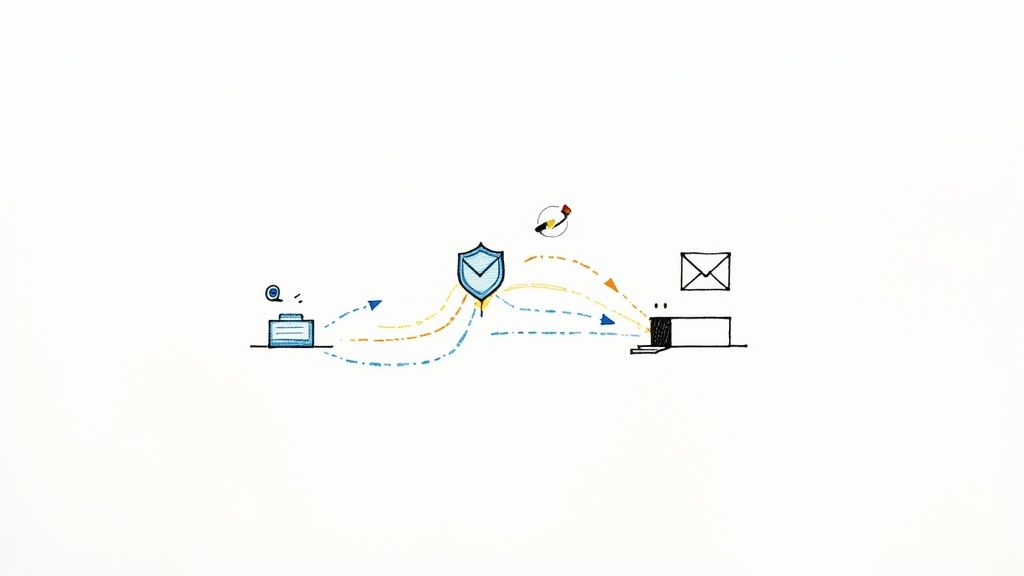
Image 1: “Auto-generated email ecosystem” diagram
A simple flow chart:
ICP → Data → Validation → Deliverability setup → Personalization → Sequence → Measurement
Alt text: Auto-generated email workflow from targeting to measurement.
Image 2: Deliverability checklist graphic
SPF, DKIM, DMARC, warm-up, ramp schedule, bounce and complaint thresholds.
Alt text: Cold email deliverability checklist.
Image 3: Example sequence timeline
Day 1, 3, 6, 10, 14 with the purpose of each step.
Alt text: Multi-step cold email sequence timeline.
Image 4: Personalization examples
Two short email intros side-by-side. One generic, one signal-based.
Alt text: Generic vs signal-based email personalization example.
Image 5: PlusVibe dashboard or campaign builder screenshot (if you have it)
Show metrics or the sequence builder.
Alt text: PlusVibe cold email campaign dashboard and metrics.
If you want, I can also draft the actual image copy and layout notes for a designer so the graphics match the article and don’t look like stock filler.
Quick start checklist (pin this near the top of your process)
- Separate outreach domain from main domain
- Set up SPF, DKIM, DMARC
- Warm up inboxes and ramp slowly
- Connect multiple inboxes, keep per-inbox volume low
- Use enriched, trigger-based targeting
- Validate emails before sending
- Write short emails with one clear question
- Build a sequence that adds value each step
- Track bounce, complaints, reply rate, positive replies
- Iterate weekly, not monthly
Wrap up
Auto-generated email is not about sending more emails. It’s about building a system that can send the right emails, safely, and keep improving over time.
If you nail list quality and deliverability, automation becomes a multiplier instead of a liability. Add AI personalization carefully, with real signals, and you get scale without sounding like a robot.
If you want to test a platform built specifically around cold outreach deliverability plus automation, PlusVibe is worth a look. Start small, run a clean experiment, and let the numbers tell you the truth.
Because outbound still works. It just punishes laziness faster now.
FAQs (Frequently Asked Questions)
What does 'auto-generated email' mean in the context of B2B cold outreach?
In B2B cold outreach, 'auto-generated email' refers to sales outreach automation where outbound emails are sent to prospects who did not opt in, using automation and AI to generate and personalize emails at scale while protecting deliverability. This differs from triggered transactional emails or marketing automation emails, focusing specifically on cold outreach that balances scale, relevance, and deliverability.
Why do many auto-generated cold email campaigns fail despite good copy or tools?
Auto-generated cold email campaigns often fail due to issues like messy contact lists with bad targeting or outdated contacts, sending to invalid emails causing bounces, lack of proper domain warm-up, weak or damaged domain reputation, over-sending emails too fast or too frequently, fake personalization that feels tokenized, vague offers without clear reasons to reply, skewed tracking metrics like unreliable open rates, and ignoring spam complaints which accumulate and harm deliverability.
How can businesses balance scale, relevance, and deliverability in automated cold email outreach?
Balancing scale, relevance, and deliverability requires a strategic system approach: defining an ideal customer profile (ICP), sourcing and enriching accurate data, verifying emails before sending, managing deliverability infrastructure including domain reputation and warm-up processes, leveraging AI for genuine personalization based on real signals and constraints, sequencing multi-step automated campaigns with conditional logic and timing windows, and continuously measuring key metrics like reply quality and spam complaints to iterate effectively.
What role does PlusVibe play in modern auto-generated email systems?
PlusVibe is designed as an all-in-one platform for cold email automation that integrates inbox warm-up, deliverability controls, unlimited inbox connections, AI-powered hyper-personalization (including images/GIFs/video), data enrichment and validation, sequencing automation, along with dashboards for performance tracking. It helps users implement the modern outbound stack efficiently by covering critical layers like personalization, deliverability infrastructure, and measurement within one system.
What are some key strategies to improve cold email open rates and response rates?
Improving cold email open rates involves crafting compelling subject lines aligned with business communication best practices and proper email formatting. Ensuring list quality through targeted ICP definition and validated contacts reduces bounces. Personalization must be authentic rather than token swaps. Sequencing follow-up emails thoughtfully increases response chances. Monitoring domain reputation prevents blacklisting that harms inbox placement. Leveraging AI for hyper-personalization while maintaining relevance also boosts engagement.
Why is deliverability considered an ongoing operating system rather than a one-time setup step?
Deliverability is an ongoing operating system because factors affecting inbox placement—like domain reputation health, sending volume limits, bounce rates, spam complaints—constantly change over time. Treating deliverability as a one-time checkbox leads to decay in performance as new issues arise unnoticed. Continuous monitoring of these metrics combined with proactive warm-up processes, list hygiene maintenance, adaptive sequencing strategies, and prompt responses to complaints is essential to sustain high deliverability in auto-generated cold email campaigns.