.jpeg)
Buyer intent data reveals which accounts are actively researching a product or category, using first-party and third-party signals to show who is in-market right now. The main payoff is prioritization: sales and marketing teams stop cold-calling random lists and instead focus outreach where interest already exists. The real work is turning a raw signal into a score your team can act on.
TL;DR:
- Buyer intent data is most reliable when combining high-quality first-party signals with third-party co-op data that captures research happening outside your site.
- Signals indicating behavioral interest, such as pricing page visits and content comparisons, should be weighted more heavily than low-confidence indicators like homepage visits.
- An effective intent score must incorporate recency, frequency, topical relevance, and corroboration across contacts, with signals older than 30 days considered less predictive.
- Rapid response to high-intent signals is critical, with outreach ideally initiated within hours and messaging tailored to the specific topic that triggered the interest.
- Privacy risks vary by data source; vendors should support clear consent documentation, data retention policies, and opt-out mechanisms to maintain compliance.
Table of Contents
- What buyer intent data actually means
- Types of intent data and identification levels
- Signal categories and how they get captured
- Scoring and signal decay: building reliable intent scores
- Use cases and activation patterns for marketing and sales
- Implementation and integration checklist
- Privacy and vendor due diligence: a compliance-first checklist
- Measuring success: KPIs, benchmarks, and timelines
- Practitioner perspective: making intent data work with outreach-first programs
- An adjacent option: pairing intent signals with deliverability-first outreach
- FAQ
- Sources
What buyer intent data actually means
Buyer intent data is behavioral evidence that an account or person is moving toward a purchase decision. It differs from fit data, which describes whether a company matches your ideal customer profile (industry, size, budget). Fit tells you who to target; intent tells you when to reach out. A company can be a perfect fit and show zero intent, or show heavy intent while being a poor fit, so effective programs score both.
A few terms come up constantly in this space:
- Intent signal: any tracked action (page view, search, download) that suggests research activity.
- Surge: a sudden spike in signal volume for a topic or account, often the clearest sign of active buying.
- Topic taxonomy: the categorized list of subjects a vendor tracks, used to match content consumption to your product categories.
- Intent score: a composite number that weighs signals by type, recency, and volume to rank accounts.
Consider two accounts: one reads a single blog post about your category, the other visits your pricing page three times in a week and searches comparison terms. Both show “intent” in the loosest sense, but only the second deserves a same-day outreach call.
Types of intent data and identification levels
Not all intent data comes from the same place, and the source shapes both quality and risk.
- First-party data: signals collected directly on your own site, product, or email program (pricing page visits, demo requests, email clicks). This is generally the highest-quality signal because it reflects direct interaction with your brand and carries lower privacy risk.
- Zero-party data: information a prospect volunteers directly, through preference centers, surveys, or gated content choices. Collecting it well means asking short, specific questions at natural moments, like after a webinar or inside an onboarding flow.
- Second-party data: another company’s first-party data, shared under a direct agreement, less common but useful in partner ecosystems.
- Third-party and co-op data: signals aggregated across a network of publisher and review sites, showing research activity happening off your own domain. This expands visibility to accounts that have not yet visited your site.
The identification level matters as much as the source. Person-level data ties a signal to a named individual and allows precise targeting, but it carries more privacy exposure and stricter consent requirements. Account-level data aggregates signals to the company level, trading some precision for lower risk and broader legal flexibility. Many teams blend first-party account activity with third-party co-op signals to catch both active site visitors and net-new accounts researching elsewhere.
Signal categories and how they get captured
Intent signals fall into a few practical buckets, and not all of them carry the same weight.
- Behavioral signals: pricing page visits, feature comparisons, repeat product-page views. These sit closest to purchase and should be weighted highest.
- Low-confidence signals: a single blog read or a brief homepage visit. These indicate awareness, not intent, and should never trigger sales outreach on their own.
- Engagement signals: webinar attendance, demo requests, email opens and clicks, which show sustained interest over time.
- Search and review signals: branded and category search terms, review-site comparisons, and competitor research, often the earliest indicators of a formal buying process.
- Technology signals: detected use of complementary or competing tools, useful for understanding what an account already runs.
Collecting these signals is only half the job. Vendors and internal teams then normalize the data: deduplicating overlapping records, mapping raw page URLs or search terms to a shared topic taxonomy, and resolving identities so that a visit from a work laptop and a click from a personal email both attach to the same account record.
A commonly referenced figure on intent-driven conversion often lacks methodological transparency, so verify the underlying study before quoting headline numbers in forecasts. vendor statistics on intent lift often get recycled without their original methodology attached, so verify the underlying study before quoting a headline number internally.
Scoring and signal decay: building reliable intent scores
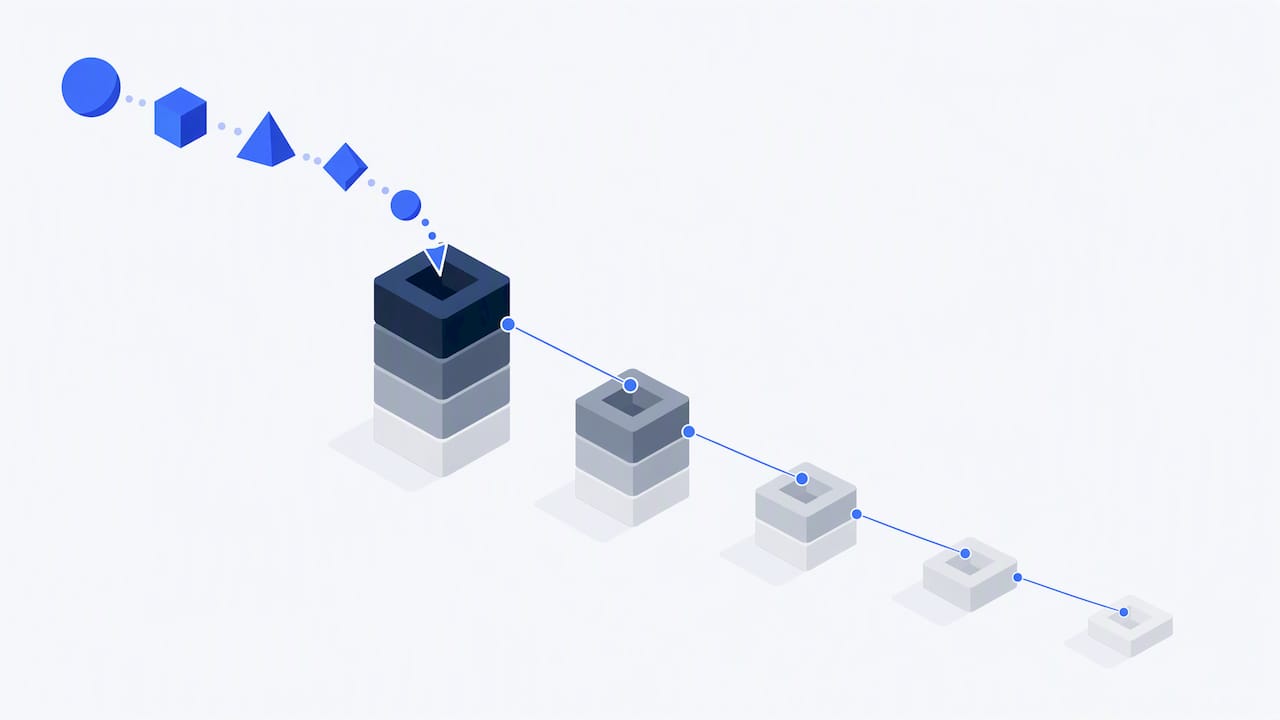
A usable intent score blends several components: recency (how recently the signal occurred), frequency (how often it repeats), topical specificity (how closely the topic matches your product), and cross-contact corroboration (whether multiple people at the same account are showing interest, which strengthens the signal considerably).
Decay matters because old signals stop predicting anything. Many practitioners treat signals older than 30 days as low-confidence, since buying windows shift and interest that peaked a month ago may have already resolved, either into a purchase or a dead end. A fast accumulation of signals in a short window, often called spike velocity, tends to be a stronger early indicator of an active buying cycle than any single high-value action.
- Start with a simple weighted model: behavioral signals weighted highest, engagement next, awareness signals last.
- Set a decay curve so signal value drops steadily after the first one to two weeks.
- Define a “high-intent” threshold through testing, not guesswork, using a holdout group to confirm the threshold actually correlates with closed revenue.
- Feed the score into your CRM so reps see a ranked queue, not a raw data dump.
Pro Tip: Run a 90-day holdout test before trusting any intent threshold at scale, comparing outcomes for accounts above and below the cutoff.
Use cases and activation patterns for marketing and sales
Once an account crosses your intent threshold, the response needs to be fast and specific, not generic.
- Sales prioritization: route high-intent accounts into a priority queue so SDRs call or email them within hours, not days, and equip reps with a short playbook snippet tied to the specific topic the account researched.
- ABM personalization: sequence content and landing pages around the exact topic that triggered the signal, so a prospect who researched integrations sees integration-focused messaging, not a generic product overview.
- Ad activation: build audiences from high-intent accounts and refresh them on a short cycle, since intent decays and stale audiences waste spend on accounts that have already moved on or converted.
- Content and nurture shifts: move accounts into a faster-paced nurture track when they show surge activity, rather than leaving them in a standard monthly cadence.
The most common failure mode is treating a single signal as a green light for aggressive outreach. An account that read one comparison article is not ready for a hard sales pitch, and blasting it with five emails in two days tends to create the opposite of trust. Match the intensity of outreach to the strength of the signal.
Implementation and integration checklist
Intent data only creates value once it reaches the systems your team already works in. That means connecting intent feeds to your CRM, marketing automation platform, sales engagement tool, and ad platforms, so scores and alerts show up where reps and marketers actually look.
- Confirm identity resolution works across devices and channels before trusting account-level scores.
- Set up automated alerts for threshold crossings, routed to the right owner, not a shared inbox nobody checks.
- Build a service-level agreement for follow-up speed, since a high-intent signal loses value with every hour of delay.
- Audit enrichment data regularly, since stale firmographic or contact data undermines even a well-built score.
Pro Tip: Start with one clean integration (CRM plus one intent source) before layering in ad platforms, since a messy multi-tool rollout usually buries the signal in noise.
Teams building out enrichment workflows alongside intent scoring often lean on AI-powered prospect enrichment to keep contact and firmographic data current as new accounts enter the pipeline.
Privacy and vendor due diligence: a compliance-first checklist
Not every intent source is worth the risk it carries. Bidstream data, harvested from real-time ad-bidding auctions, often lacks clear consent provenance and has drawn regulatory scrutiny, so prioritizing consent-based sources protects both your program and your brand.
- Ask any vendor how they document consent and whether records are audit-ready with timestamps and purpose.
- Confirm CMP (consent management platform) support, since TCF frameworks define specific consent and disclosure purposes that a compliant vendor should map to.
- Ask about data retention periods and whether opt-outs propagate across their entire network, not just your account.
- Favor account-level data where person-level precision is not essential, since it reduces PII exposure while still supporting prioritization.
- Maintain your own preference center so prospects can see and control what you hold.
- Document opt-outs internally and propagate them to both your CRM and ad platforms.
- Review vendor certifications and audit logs on a recurring schedule, not just at signing.
Measuring success: KPIs, benchmarks, and timelines
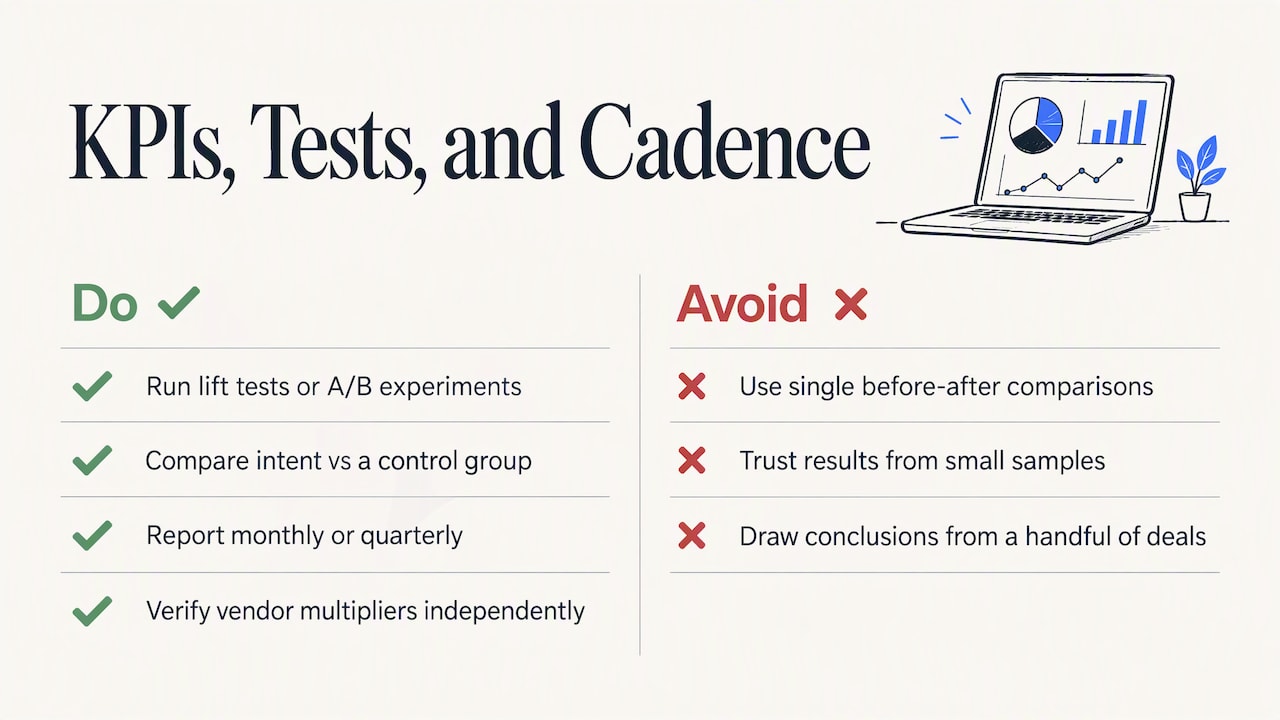
The core metrics that validate an intent program are SQL conversion lift, sales-accepted-lead rate, pipeline velocity, and win rates on intent-sourced deals compared to a control group without intent prioritization. Run these as lift tests or A/B experiments rather than a single before-and-after comparison, since seasonality and rep performance can distort raw numbers.
Lead generation is the largest documented use case for intent data, and the reported effects on conversion are substantial when intent pairs with account-based marketing: teams report meaningful conversion lift and shorter sales cycles when combining intent signals with ABM programs, though exact multipliers vary by vendor methodology and deserve independent verification before they go into a board deck.
Report on a monthly or quarterly cadence, and treat any result from a small sample size with caution. A handful of closed deals is not enough to confirm a threshold works across your full pipeline.
Practitioner perspective: making intent data work with outreach-first programs
Intent scores are only as useful as the outreach that follows them. We have watched teams build sophisticated scoring models, then torch the opportunity with a sloppy, unverified sending domain that lands high-intent prospects straight in spam. Sequence your deliverability checks before you scale any intent-triggered campaign, not after. Automation handles the first touch on moderate-intent accounts well; manual, researched personalization earns its keep on the small number of surge accounts that matter most. Treat your threshold as a hypothesis, not a fixed rule, and adjust it every quarter against real reply and meeting-booked data.
— Yaro
An adjacent option: pairing intent signals with deliverability-first outreach
Intent data tells you who to contact. What happens next depends on whether your outreach actually reaches an inbox, and that is where we focus. Our platform includes private, isolated sending infrastructure, inbox warm-up, and deliverability monitoring to help ensure that high-intent accounts your scoring model surfaces do not get lost to spam filters or shared-IP reputation problems.
- Features help protect sender reputation as you scale outreach to intent-triggered lists.
- Enrichment and verification tools keep contact data current so personalization lands on the right person.
- Integrations with popular tools connect campaign activity back to the CRM where your intent scores already live.
A deliverability-first stack reduces wasted sends on accounts that already showed interest, which is the whole point of scoring intent in the first place. Check our plans and pricing to see which setup fits your sending volume.
FAQ
What is buyer intent data?
Buyer intent data is behavioral evidence, drawn from first-party site activity, zero-party inputs, and third-party co-op networks, that shows an account or person is actively researching a purchase. It is used to prioritize outreach toward accounts most likely to buy soon rather than spreading effort evenly across a list.
Who offers the best intent data?
There is no single best provider for every team, since the right fit depends on your identity resolution needs, industry coverage, and privacy requirements. Evaluate any vendor against a due diligence checklist covering consent provenance, CMP support, and retention policy rather than relying on marketing claims alone.
What is the meaning of intent data?
Intent data refers to tracked signals, such as page visits, searches, and content downloads, that indicate a prospect is in an active buying process. The term covers both the raw signals and the composite scores built from them to rank accounts by likelihood to purchase.
What is purchase intent data?
Purchase intent data is a narrower slice of buyer intent focused specifically on signals tied to the final stages of a buying decision, such as pricing page visits, demo requests, or comparison searches. It is typically weighted more heavily than general awareness signals when building an intent score.